Business Key Stage 3&4





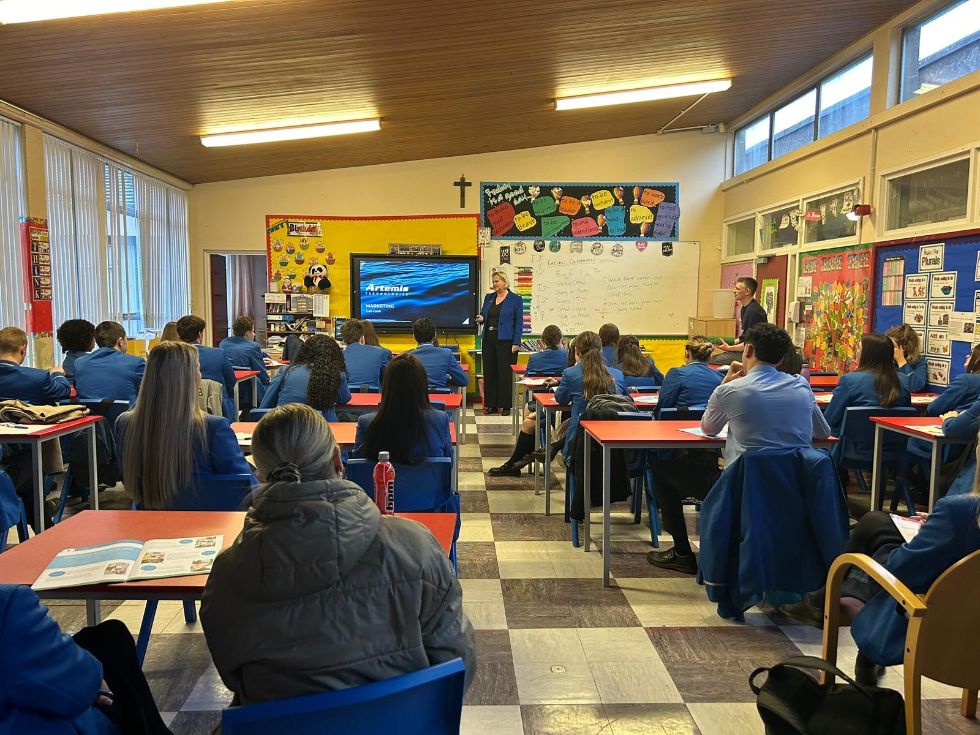
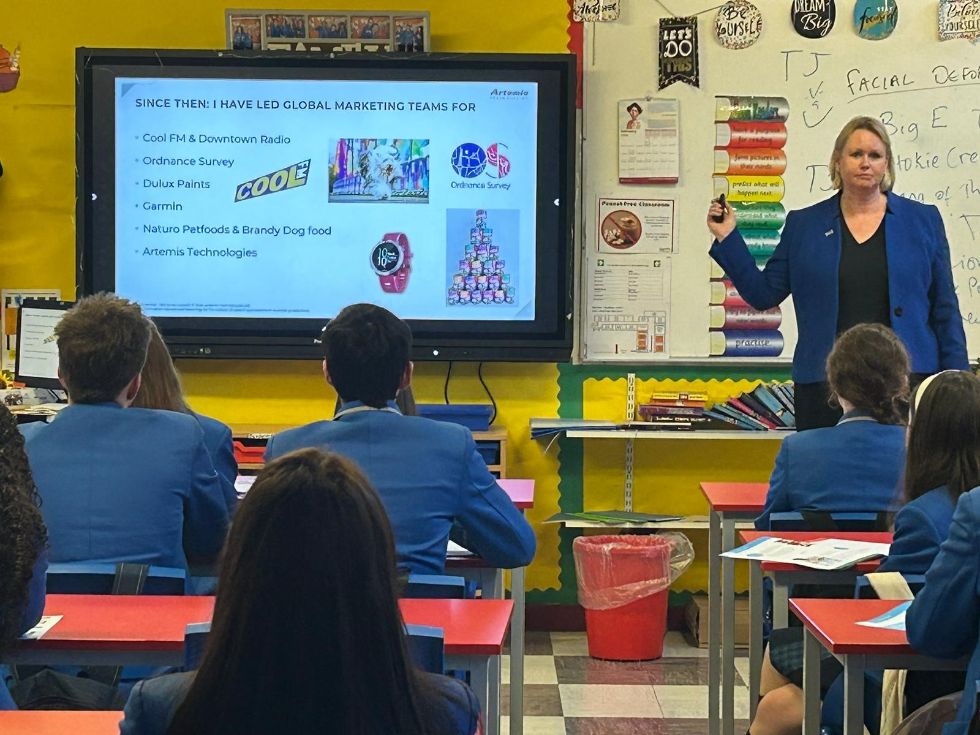
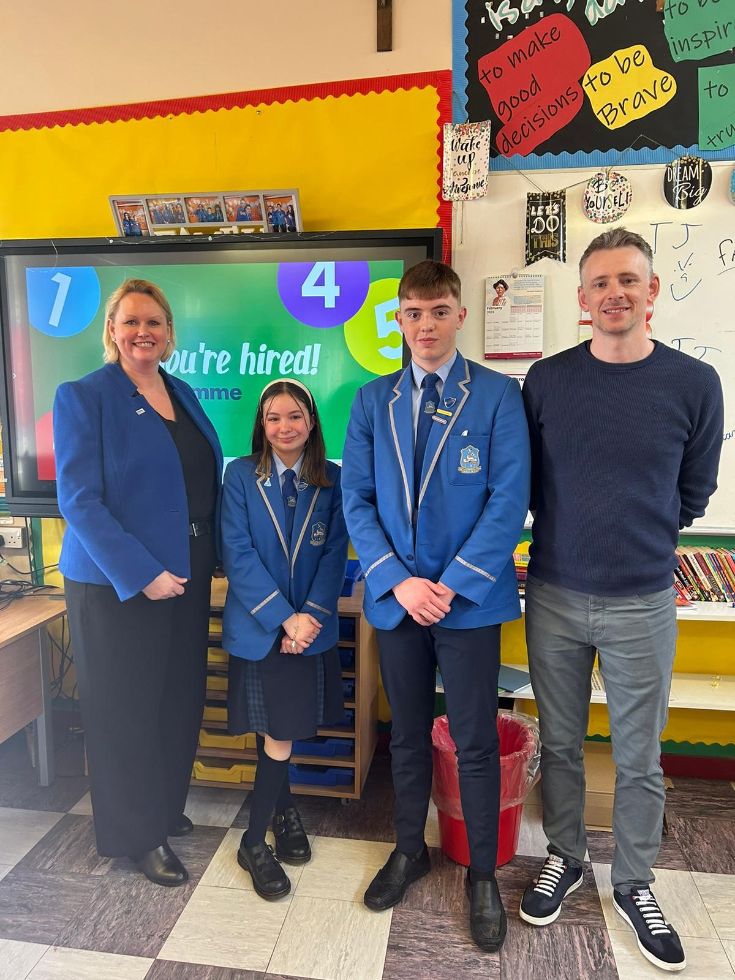
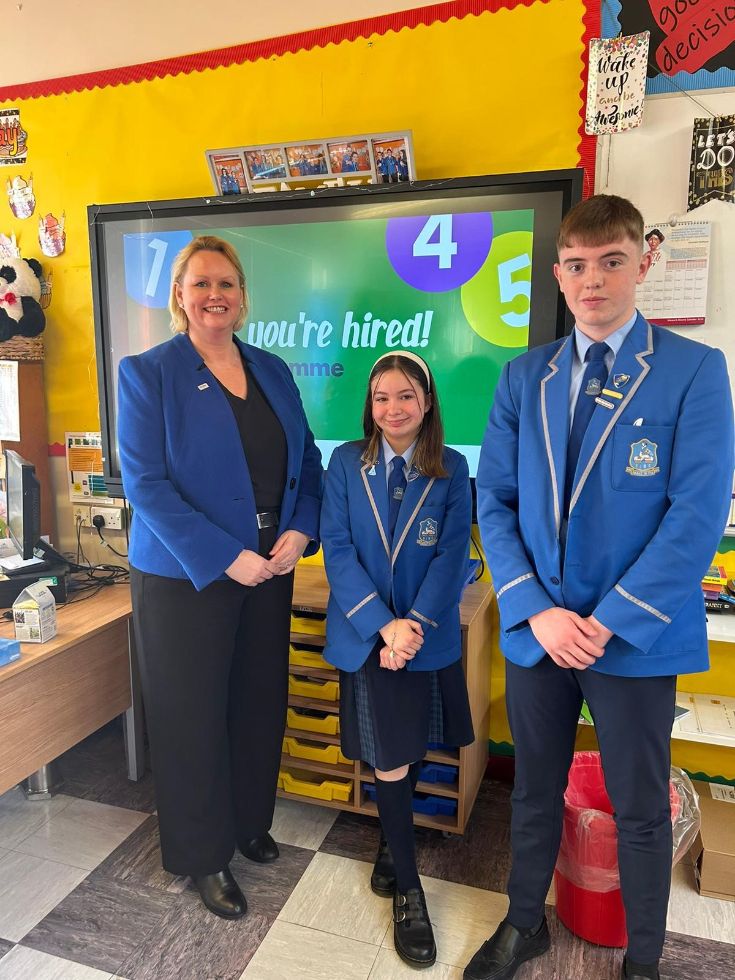
The aim of the Business Innovation programme is to make the connection between school and the world of work, enabling young people to develop the knowledge and attitudes they need to succeed, building on 8 key skills:
- Communication
- Confidence
- Financial Capability
- Initiative
- Organisation
- Problem-solving
- Teamwork
- Resilience
Staff involved-
- Miss Jenna Boden (Leader of Learning)
- Mr Ryan Watters
- Mr Cahir McNeil
- Mr Barry McCambridge
Key Stage 3
In St. John the Baptist’s College, we now offer this programme to all Key Stage 3 pupils. An outline of course content is detailed below:
|
Year 8 |
|
|
Year 9 |
|
|
Year 10 |
|
Afterschools ICT & Coding Club
Our Afterschools ICT & Coding Club offers KS3 pupils a dynamic and engaging environment to explore technology beyond the classroom. The club blends coding, gaming, and computer-based activities to foster creativity, problem-solving, and digital literacy.
Pupils participate in:
- Coding challenges using platforms like Scratch, Python, and HTML.
- Gaming sessions that promote teamwork and strategic thinking, including Minecraft and Esports.
- Digital Schoolhouse events with local primary schools, using Nintendo Switches to introduce younger learners to coding through game-based learning.
- Competitions such as the AWS App Challenge, W5 First Lego League, and Queens University Igloo Coding, where students showcase their skills and collaborate with peers across Northern Ireland.
The club is designed to be inclusive, fun, and educational—supporting pupils’ interest in ICT while preparing them for future digital opportunities.
KS4 Overview
Key Stage 4 Business: At Key Stage 4 we currently offer three Business related courses:
Link to Google Sites Explanation: https://sites.google.com/c2ken.net/sjbcgcseoptions2023-2024/gcse-business-studies
|
GCSE Business Studies |
The CCEA GCSE Business Studies specification encourages students to investigate how businesses start up. They explore the resources, marketing and finance that businesses need and the challenges they face. They also examine how businesses grow and the role of stakeholders: groups that have an interest in a business. They understand the role of human resources, the recruitment and selection process, and the value of employee training and motivation. Important new topics include the role of social enterprise, e-business and m-business. Students discover how businesses can use electronic and mobile technology in different ways. They also learn to apply skills such as decision making, proposing business strategies or solutions, understanding other viewpoints and justifying decisions. Assessment is through two written exams, each worth 40% of the final mark, and a controlled assessment unit worth 20%. This specification is unitised, so it’s possible to take part of the assessment at the end of the first year of study. This qualification builds on the knowledge, understanding and skills developed through the Learning for Life and Work Area of Learning. The specification has three units:
Unit 1: Starting a Business Unit 2: Developing a Business Unit 3: Planning a Business |
|
OCN Business |
OCN Business- Link to OCN explanation: https://sites.google.com/c2ken.net/sjbcgcseoptions2023-2024/ocn-business-studies The aim of the OCN NI Level 2 Award, Certificate, Extended Certificate and Diploma in Skills for Business is to allow learners to develop the knowledge, understanding and key skills required to work within a business setting. These qualifications provide an engaging, practical and relevant introduction to the world of business today. OCN courses are all 100% portfolio. Currently, the 4 units studied by pupils in SJBC are: Unit 1:Understanding Business Structures Unit 2:Business Aims and Objectives Unit 3:Marketing Mix and Competition Unit 4:Recruitment and Selection |
|
GCSE Business and Communication Systems |
This specification sets out the content and assessment details for our GCSE course in Business and Communication Systems. We have designed this specification to meet The specification has three units:
Unit 1: Software Applications for Business. In this unit, students learn about relevant functions in software applications and Unit 2: The Business Environment. In this unit, students gain a broad introduction to the business world. They learn Unit 3: Developing Digital Solutions. In this unit, students use the skills they have developed in Units 1 and 2 to plan and develop a digital solution for a business. This unit is synoptic; it tests students’ understanding of the connections between the different elements of the subject. |